Bhubaneswar: Union Tribal Affairs Minister Jual Oram on Tuesday said India’s tribal communities possess a rich wealth of languages, dialects, oral traditions and indigenous knowledge that must be preserved for future generations, and stressed the need for systematic documentation of dialects that continue to survive primarily through oral tradition.
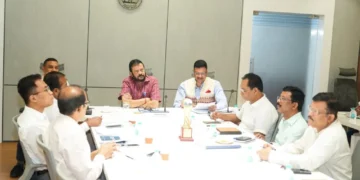
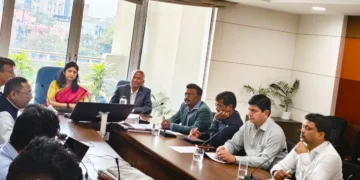
Addressing a two-day national workshop on “Strengthening Tribal Research Institutes (TRIs)” organised by the Ministry of Tribal Affairs here, Oram said Tribal Research Institutes have a crucial responsibility to engage with communities, document their languages and traditional knowledge, and share best practices across states. He said the workshop reaffirmed the Government of India’s commitment to strengthening institutions that preserve tribal heritage and support inclusive development.
Minister of State for Tribal Affairs Durgadas Uikey said tribal development has become an integral part of the country’s journey towards Viksit Bharat@2047 through initiatives such as PM JANMAN, Dharti Aaba Janjatiya Gram Utkarsh Abhiyan and Eklavya Model Residential Schools. He said TRIs should undertake research on emerging priorities, including tribal livelihoods, women’s empowerment, education, health, nutrition, climate resilience, digital inclusion and implementation of the Forest Rights Act.
NITI Aayog member Dr R. Balasubramaniam said Tribal Research Institutes should evolve into policy think tanks, repositories of indigenous knowledge and centres of excellence for innovation. He said research should reflect the voices, lived experiences and traditional wisdom of tribal communities, while emphasising the need to keep evidence rooted in community realities as artificial intelligence transforms governance.
Odisha Minister for ST & SC Development, Minorities and Backward Classes Welfare Nityananda Gond said TRIs should develop into centres for policy innovation, digital knowledge and interdisciplinary research covering tribal education, healthcare, nutrition, migration, climate resilience, forest-based livelihoods and preservation of tribal languages. He also stressed the use of digital documentation, GIS-based mapping and AI-enabled analytics while ensuring tribal communities remain active partners in the research process.
In her opening remarks, Tribal Affairs Secretary Ranjana Chopra said there was a need to strengthen institutions that preserve tribal heritage, protect constitutional rights and generate evidence for policymaking. She said the workshop would enable Tribal Research Institutes to exchange experiences and best practices, and its recommendations would help the Ministry prepare a roadmap for strengthening the institutes as centres of knowledge, research and policy support.
The workshop brought together nearly 200 participants from Tribal Research Institutes, state tribal welfare departments, academic and research institutions, technology organisations, industry, development partners and civil society.
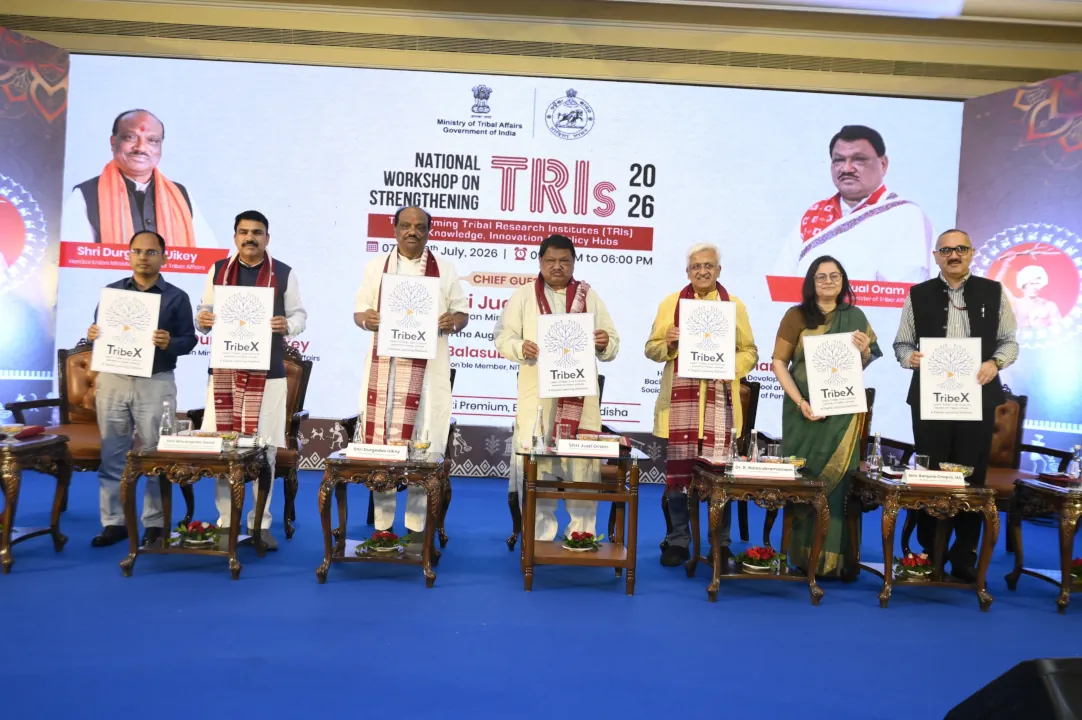
A key highlight of the inaugural session was the launch of TribeX, a digital learning platform aimed at preserving and promoting India’s tribal arts, culture, languages and traditional knowledge. The platform includes a Digital Academy offering free certificate and UGC-aligned diploma courses in tribal art forms, along with a Heritage Archive of tribal literature, oral traditions and cultural practices.
The Ministry also signed an MoU with Sampurnanand Sanskrit Vishwavidyalaya, Varanasi, to develop UGC-recognised diploma programmes under TribeX on tribal languages, traditional knowledge, arts, textiles and museology. Another MoU was signed with KIIT Technology Business Incubator, Bhubaneswar, to identify, incubate and mentor tribal entrepreneurs through capacity building, market linkages and access to funding.