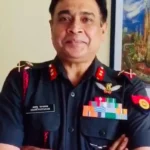
As a combat helicopter pilot in the Indian Army Aviation and later as a general, it has been an honour and a privilege to serve the country at some of the most challenging frontiers including commanding an infantry brigade with operational responsibility adjoining the famed Nathu La Pass in Sikkim overlooking the strategic Chumbi Valley. However, the most memorable and rewarding tenure was my service in the highest battlefield of the world, the Siachen Glacier in 1991–93 which also gave me my first-hand operational experience in the adjoining sector Kargil. Ten years later, I would again return to this sacred land to command an artillery regiment with operational deployment in the Mushkoh Valley of Dras to recapture Pt 5353 in the summer of 2003.
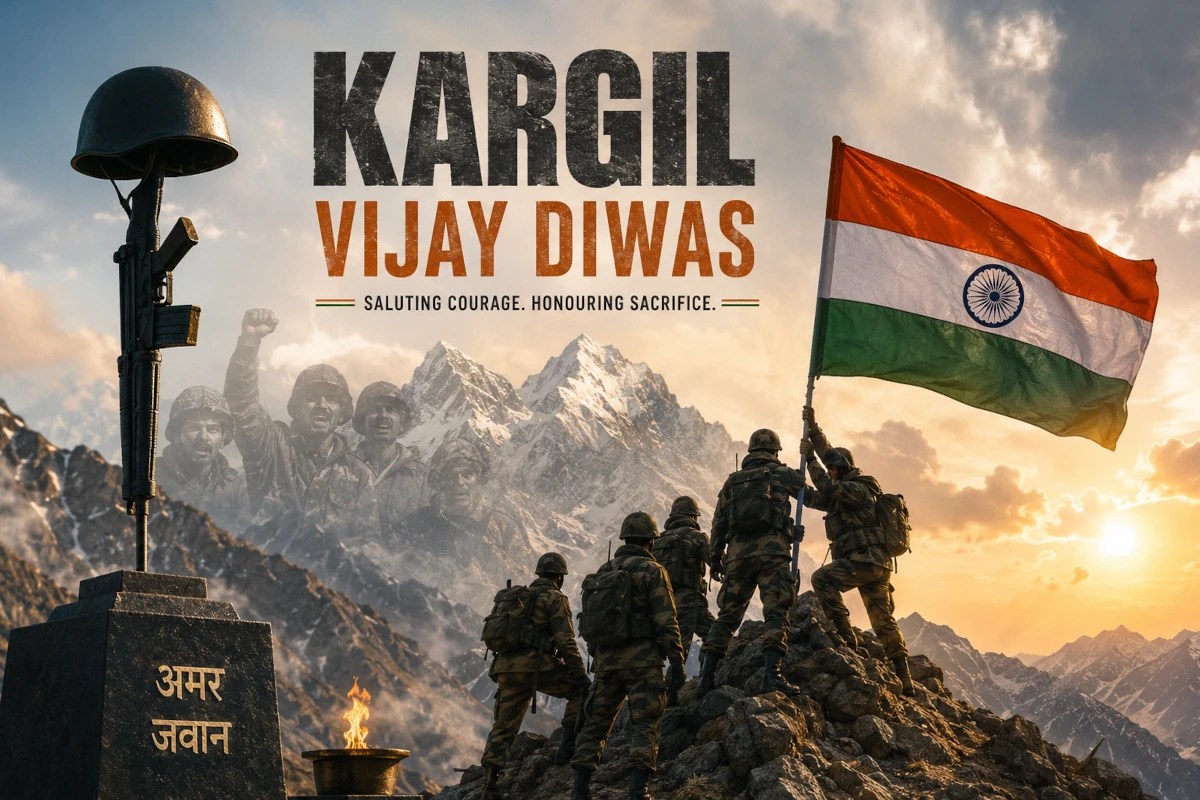
As we commemorate the Kargil Vijay Diwas, I wish to pay my personal tribute to soldiers who made the supreme sacrifice in the intervening summer of 1999 defending the motherland. In particular, I would like to mention two battalions of infantry, 17 JAT and 18 Grenadiers, which significantly contributed to the Kargil Victory. These two battalions were part of the infantry brigade stationed at Sri Ganganagar in Rajasthan while I was posted there as the Brigade administrative staff officer. This had given me the opportunity to personally know their officers and many of their troops over two years. Little had I imagined then that these two battalions would display extraordinary valour and become folklore in their next deployment in Kargil.
18 Grenadiers under Colonel Kushal Thakur, who assumed command in Sri Ganganagar and moved the battalion to Dras, recaptured the towering Tololing peak which dominates over the vital lifeline Srinagar–Leh Highway. Lt Col Viswanathan, the second-in-command of the battalion, was KIA (Killed in Action). Maj Vivek Gupta of 2 Mech, then attached to 18 Grenadiers and commanding a company, was KIA on July 2, 1999 during the final assault on Tololing and posthumously decorated with Maha Vir Chakra. Subsequently, the battalion would lead the offensive to capture Tiger Hill. Nineteen-year-old Sepoy (later Subedar Major and Honorary Captain) Yogendra Singh Yadav, who had joined the battalion in Sri Ganganagar, would be hit by 17 bullets on his way to the top, crawl to the first bunker and lob a grenade killing four Pakistani soldiers. He was decorated with the country’s highest gallantry award of Param Vir Chakra. The soldiers took bath and had hot cooked food after 24 days of continuous intense operations. The countrymen must remember.
17 JAT under Colonel Umesh Singh Bawa, who had been the second-in-command of the battalion in Sri Ganganagar, was tasked with capturing Point 4875 in the Mushkoh Valley, a strategic peak which dominated the highway vital for the Indian Army’s operations in the region. The battalion’s efforts were marked by intense combat and the bravery of its soldiers, including Captain Anuj Nayyar, posthumously awarded the Maha Vir Chakra, and Major Deepak Rampal with Vir Chakra for their exemplary valour. Col Bawa, whom I knew very well personally, was decorated with Vir Chakra and rose to become a Brigadier.
Five ex-students of Army Public School, Dhaula Kuan (APS-DK), New Delhi, made the supreme sacrifice in the Kargil War. They were Major Vivek Gupta, MVC (1987 Batch), Capt Sanjiv Dahiya (1991 Batch), Capt Aditya Mishra (1991 Batch), Capt Vijayant Thapar, VrC (1993 Batch) and Lt Amit Verma (1993 Batch). A year later, our two daughters would join the APS-DK and felt so proud of their legacy with portraits of these real-life heroes displayed in the entrance foyer of the school. My tributes to these valiant martyrs is, therefore, very personal.
As a Gunner, I would also like to pay my tribute to the fearless gunners for their unsung contribution to victory in the Kargil war. Accurate, relentless and unforgiving, the guns had blazed day and night in the summer of 1999, reducing the formidable bunkers on the lofty heights of Kargil to rubble. As hundreds of infantrymen scrambled up impossible escarpments to reach icy peaks and evict the intruders in fierce hand-to-hand fights, the Indian Artillery fired over 2,50,000 rounds of all types from 300 different types of guns and MBRL, including 9,000 on the day the Tiger Hill was recaptured. Such ferocity of shelling only happened previously during the Second World War, when Joseph Stalin had famously said, “Artillery is the God of War.” The Kargil war gave us a graphic account of what Stalin meant.
I would make a final tribute to our very own hero, Major Padmapani Acharya, Maha Vir Chakra (Posthumous), after whom the Army Welfare Housing Organisation (AWHO) colony in Bhubaneswar is named. Son of a Wing Commander, Padmapani was in command of a Company of 2 Raj Rif in the assault to capture Tololing alongside 18 Grenadiers. Acharya wrote to his father at the outbreak of war a letter his father would receive after his death:
“Dear Papa… don’t worry about casualties — it’s a professional hazard beyond our control. At least it is for a good cause. Tell mamma that combat is an honour of a lifetime and I could not think of anything less. What better way to serve the nation? Tell a story a day from the Mahabharata to Charu (his wife), so that your grandchild imbibes good values.”
His daughter, Aparajita, was born a few months after his death.
As many as 527 armed forces personnel were killed in action in Operation Vijay while evicting Pakistani soldiers and irregulars from the country’s soil. They would have been men in their fifties and sixties today, greying and wise, had they been alive. Some would have been colonels and generals in the Army, others senior non-commissioned officers. They would have had grown-up children, some married off and maybe some would even have had grandchildren to play around. That was not to be. They stay forever young; starry-eyed soldiers and officers, martyred on the freezing snow-capped heights of Kargil defending their motherland.
As we pay homage to the martyrs and recount their supreme sacrifice, it is an occasion to reflect whether we as a country and as a society treat our armed forces veterans with care, compassion and respect they deserve. The Kargil Vijay Diwas is an apt occasion to sound a clarion call for our countrymen to reach out to the nearest families of those that stand guard at the frontiers braving snow storms and blizzards. Make them feel that you care.